
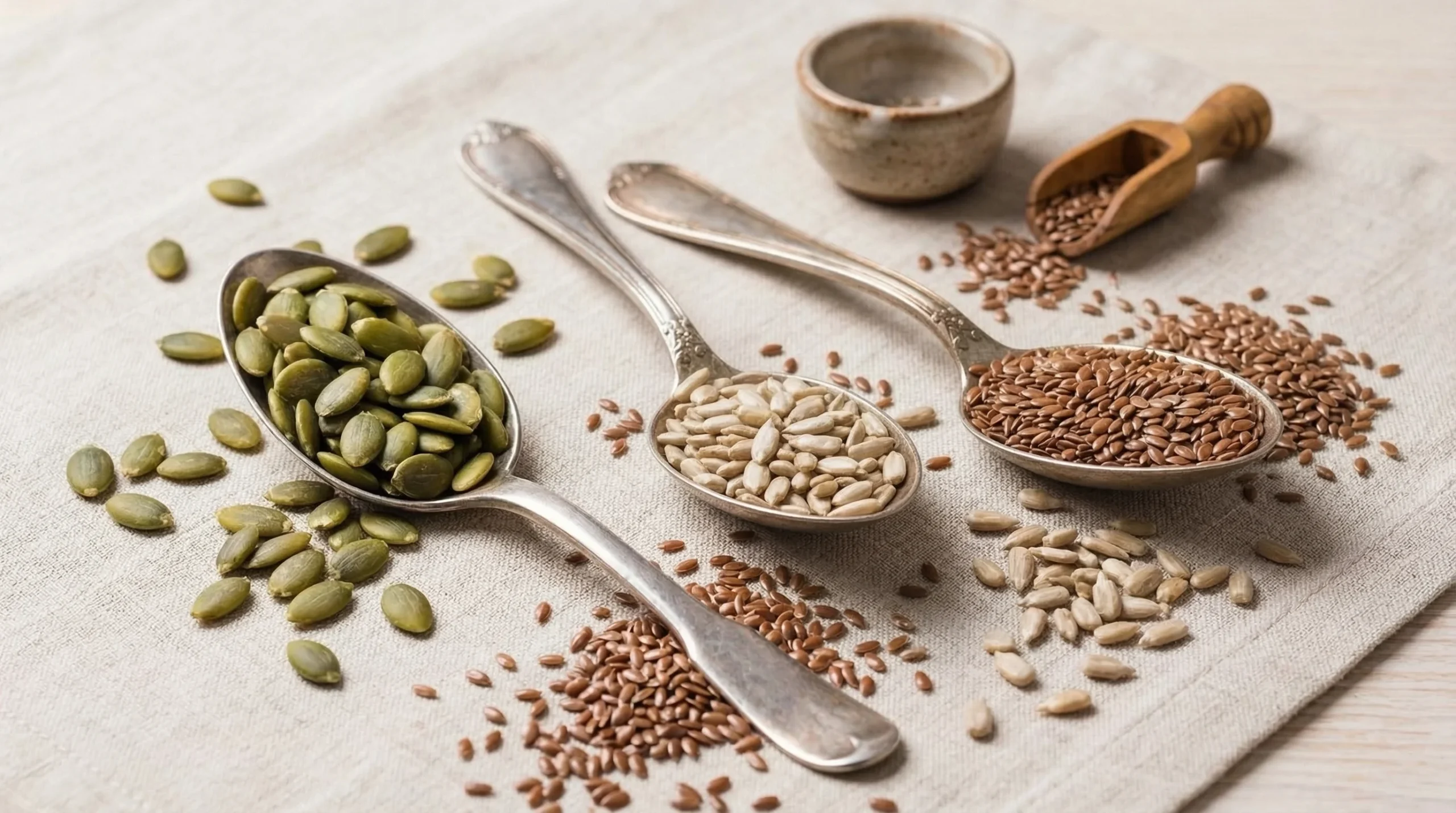
Tiny Blueprints of Life: Why These Three Seeds are the Foundation of Every Longevity Diet
Introduction
In the grand architecture of a healthy diet, we often focus on the “big” things-the proteins, the leafy greens, and the exotic fruits. But at NutraBloom, we know that some of nature’s most potent healing properties are housed in the smallest packages. Welcome to the world of Superseeds.
Seeds are the biological “blueprints” of plants. Within their tiny shells, they contain every single nutrient, enzyme, and mineral required to grow into a towering sunflower, a sprawling pumpkin vine, or a resilient flax plant. When we consume these seeds, we are tapping into a concentrated source of life-force energy.
In this comprehensive guide, we explore the “Power Trio”-Pumpkin, Flax, and Sunflowerseeds. While each possesses its own unique “superpower,” together they form an unbeatable team for immunity, digestion, hormone balance, and radiant skin.
Whether you’re a fitness enthusiast looking for muscle recovery or someone seeking a natural glow from the inside out, these seeds are the missing pieces in your nutritional puzzle.
Pumpkin Seeds (Pepitas): The Muscle and Immunity Mineral House
If the almond is the “King of Nuts,” the pumpkin seed is surely the “King of Minerals.” Often called pepitas, these vibrant green kernels have been valued since the era of the Aztecs for their medicinal properties.
Where are Pumpkin Seeds Grown?
Pumpkins are cultivated worldwide, but the most nutrient-dense seeds thrive in warm climates and fertile soils. Major producers include China, India, Russia, Ukraine, Mexico, and the United States. At NutraBloom, we source from special pumpkin varieties grown specifically for their high-quality seed harvest, ensuring you get the largest, most mineral-rich pepitas available.
Nutrition Facts
Pumpkin seeds are rich in protein and minerals.
Serving Size: 28g (approximately a small handful of pumpkin seeds)
- Calories: 150
- Total Fat: 13g
- Protein: 7g
- Carbohydrates: 5g
- Fiber: 1.7g
- Minerals: Magnesium, zinc, iron, phosphorus, manganese
- Antioxidants: Polyphenols and carotenoids
Pumpkin seeds are especially known for their high zinc and magnesium, two essential minerals for energy and immunity.
What Makes Pumpkin Seeds Unique?
Pumpkin seeds are one of the best natural sources of minerals that are often missing from modern diets.
- The Zinc Guard: They are exceptionally high in zinc, which is the primary architect of your immune system and essential for skin repair.
- The Muscle Mineral: They provide high levels of magnesium, which supports over 300 biochemical reactions, specifically focusing on muscle relaxation and energy (ATP) production.
- Plant-Based Strength: With a robust protein profile, they are an ideal fuel source for vegetarians and athletes alike.
Health Benefits of Pumpkin Seeds
- Strengthens the Immune System: Regular intake helps the body fight infections and heal wounds more effectively.
- Boosts Energy and Reduces Fatigue: Magnesium supports muscle relaxation, making these a perfect snack for those who feel tired or stressed.
- Supports Heart & Blood Health: As a great plant source of iron, they support oxygen transport and healthy circulation.
- Supports Muscle Recovery: Rich in protein and magnesium, they are excellent for post-fitness recovery.
- Prostate and Men’s Health: Traditionally used to support prostate wellness due to their unique zinc and plant compound profile.
- Promotes Better Sleep: They contain tryptophan, which helps the body produce the sleep hormone melatonin.
Flax Seeds: The Fiber-Rich Guardian of Heart and Hormones
Flax seeds may be small, but their impact on human health is legendary. Historically used in ancient Egypt, flax seeds are now recognized as one of the world’s most powerful anti-inflammatory superfoods.
Where are Flax Seeds Grown?
Flax is a hardy plant that prefers cooler, temperate climates with moderate rainfall. Canada is the world’s largest producer, followed by Russia, Kazakhstan, China, and India. Interestingly, the flax plant is a “dual-purpose” wonder; it produces these nutritional seeds while its stalks provide the fiber used to create high-quality linen.
Nutrition Facts
Flax seeds are famous for their omega-3 and fiber content.
Serving Size: 1 tablespoon (about 10 grams)
- Calories: 55
- Total Fat: 4g
- Protein: 2g
- Carbohydrates: 3g
- Fiber: 3g
- Omega-3 (ALA): High amount
- Minerals: Magnesium, manganese, phosphorus
- Plant compounds: Lignans (powerful antioxidants)
Flax seeds are one of the richest plant sources of omega-3 fatty acids (ALA) and dietary fiber.
What Makes Flax Seeds Unique?
Flax is a “triple threat” in nutrition because of three specific components:
- Alpha-Linolenic Acid (ALA): They are one of the richest plant sources of Omega-3 fatty acids, crucial for heart and brain health.
- Lignans: Flax contains powerful antioxidants that support hormonal balance.
- The Fiber King: They are extremely high in dietary fiber, which slows digestion and stabilizes blood sugar.
Health Benefits of Flax Seeds
- Revolutionizes Digestive Health: Containing both soluble and insoluble fiber, flax helps regulate bowel movements and supports a healthy gut microbiome.
- Heart Health: Omega-3 fats help reduce inflammation and maintain healthy cholesterol and blood pressure levels.
- Weight Management: Flax fiber expands in the stomach, promoting a feeling of fullness that reduces hunger cravings.
- Hormone Balance: The lignans in flax seeds support overall reproductive wellness and hormonal harmony, especially in women.
- Skin Hydration: Omega-3s help nourish the skin from within, reducing dryness and irritation.
Sunflower Seeds: The Vitamin E Specialist for Skin and Defense
Harvested from the centers of radiant sunflower heads, these seeds are nature’s gift to your skin and nervous system. They are the ultimate “beauty seed,” designed to protect your cells from the wear and tear of modern life.
Where are Sunflower Seeds Grown?
Sunflowers are hardy and drought-resistant, requiring open farmland and plenty of sunlight. Major production hubs include Russia, Ukraine, Argentina, China, and the United States. These regions provide the long, sunny days required for the seeds to develop their high oil and Vitamin E content.
Nutrition Facts
Sunflower seeds are nutrient-dense and energy-rich.
Serving Size: 28g (about a small handful of sunflower seeds)
- Calories: 165
- Total Fat: 14g
- Protein: 5.5g
- Carbohydrates: 7g
- Fiber: 3g
- Vitamin E: Very high
- Minerals: Magnesium, selenium, copper, phosphorus
Sunflower seeds are one of the best natural sources of Vitamin E.
What Makes Sunflower Seeds Unique?
While other seeds focus on minerals or Omega-3s, the sunflower seed is a specialist in antioxidant protection.
- Vitamin E Powerhouse: They are one of the best natural sources of Vitamin E, which protects cells from oxidative damage.
- Selenium Support: They contain selenium, a trace mineral that works as a partner to Vitamin E to strengthen the body’s defense system.
- Heart-Healthy Fats: They provide unsaturated fats that support healthy blood circulation and cholesterol balance.
Health Benefits of Sunflower Seeds
- Radiant Skin Glow: Vitamin E helps protect the skin from sun damage and pollution while supporting a hydrated, healthy appearance.
- Immune Strength: Selenium and Vitamin E work together to protect immune cells and bolster the body’s natural defenses.
- Energy & Muscle Function: Like pumpkin seeds, they are rich in magnesium, helping to convert food into energy and reduce muscle fatigue.
- Brain and Mood Health: Sunflower seeds contain B-complex vitamins that support a healthy nervous system and emotional stability.
- Healthy Hair Growth: Scalp nourishment is supported by the high mineral and Vitamin E content, promoting stronger hair.
How to Consume the Power Trio for Maximum Benefits
To truly unlock the “Superseed” potential, follow these NutraBloom culinary tips:
- The Flax Rule: Always Grind: Whole flax seeds often pass through the body undigested. To absorb the Omega-3s and lignans, always consume them ground.
- The NutraBloom Breakfast Bowl: Add a tablespoon of ground flax and a sprinkle of pumpkin seeds to your morning oatmeal or yogurt.
- The Salad Crunch: Replace croutons with toasted sunflower and pumpkin seeds for a protein-packed, gluten-free crunch.
- The Superseed Smoothie: Blend ground flax and raw pumpkin seeds into your smoothies. The healthy fats help you absorb the vitamins from your fruits and greens.
- Smart Hydration: When eating fiber-rich seeds like flax, remember to drink plentyof water to help the fiber work effectively in your digestive tract.
Why Choose NutraBloom Seeds?
At NutraBloom, we treat seeds as the foundation of vitality.
- Hand-Selected: Only the cleanest, most vibrant seeds make it into our packs.
- Expertly Handled: We ensure our flax seeds are fresh to protect their delicate Omega-3 oils from oxidation.
- Pure & Natural: No artificial colors, no hidden sodium-just 100% natural superfoods in their truest form.
Conclusion: Tiny Seeds, Massive Transformation
Incorporating the Power Trio-Pumpkin, Flax, and Sunflower seeds-into your daily life is one of the most cost-effective and scientifically sound ways to upgrade your health.
In just a few tablespoons a day, you can fortify your immune system, balance your hormones, soothe your digestion, and give your skin a natural, healthy glow. These aren’t just seeds; they are biological “software” designed to help your body run at its absolute best. Are you ready to experience the natural power of the Super Seed Trio? Start your wellness journey today with Pumpkin, Flax, and Sunflower seeds – your body will thank you for years to come.


